


Digestive discomfort is common today. Many people deal with problems like constipation, stomach acidity, and indigestion. These issues can affect daily life and make people feel uncomfortable. One product that is often used to relieve these problems is Phillips’ Milk of Magnesia.
It has been used for many years and is commonly known as a liquid medicine that may help with occasional constipation and stomach acidity.
The main ingredient in Phillips’ Milk of Magnesia is magnesium hydroxide. It draws water into the intestines. This helps soften stool. It also reduces extra stomach acid. Because of this, it may help with constipation and indigestion.
What Is Phillips’ Milk of Magnesia?
Milk of Magnesia is a liquid medication that contains magnesium hydroxide as its active ingredient. It belongs to a group of medicines known as saline laxatives and antacids.
It is commonly used to:
- Relieve occasional constipation
- Reduce stomach acidity
- Ease indigestion or heartburn
The product works by increasing water in the intestines. This helps soften stools and makes bowel movements easier.
At the same time, magnesium hydroxide can neutralize excess stomach acid, which may help reduce symptoms like heartburn or sour stomach.
Main Ingredient in Phillips’ Milk of Magnesia

The main ingredient responsible for the effects of Phillips’ Milk of Magnesia is magnesium hydroxide.
| Ingredient | Purpose | How It Works |
|---|---|---|
| Magnesium Hydroxide | Laxative and antacid | Draws water into the intestines and neutralizes stomach acid |
Magnesium hydroxide is commonly used in digestive medications because it works relatively quickly compared to some other laxatives.
However, like any medication, it should be used carefully and according to instructions.
How Phillip’s Milk of Magnesia Works
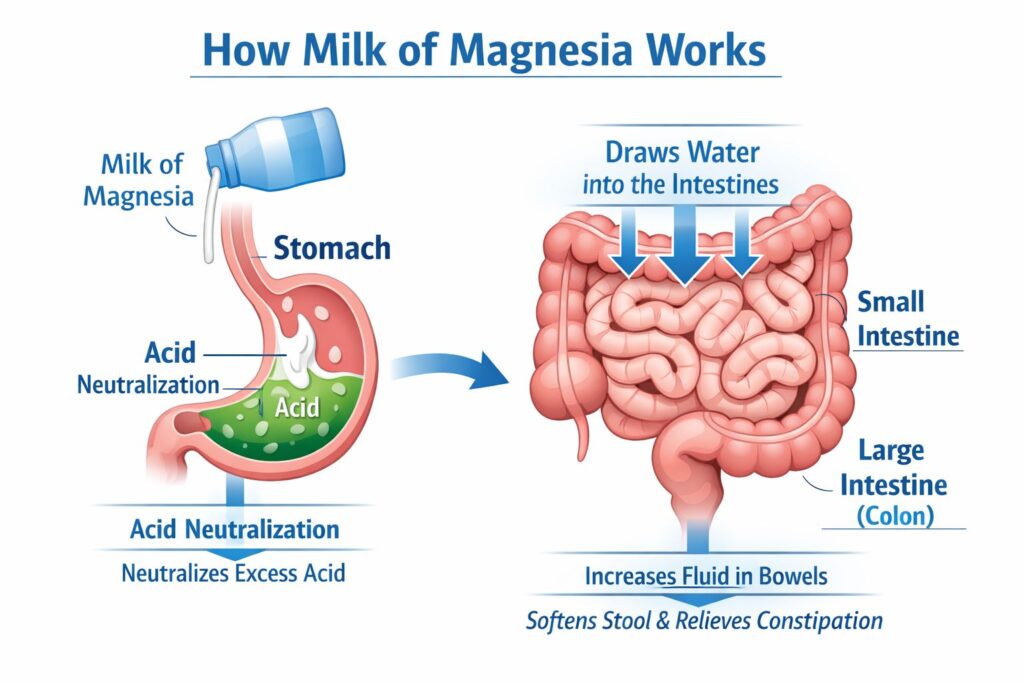
Understanding how Milk of Magnesia works can help people better understand its role in digestive health.
1. Works as a Laxative
When magnesium hydroxide reaches the intestines, it draws water into the bowel. This extra water softens the stool and stimulates bowel movement.
This process can make it easier to pass stool and may help relieve occasional constipation.
2. Neutralizes Stomach Acid
Magnesium hydroxide can also act as an antacid. It reacts with stomach acid and reduces its strength. This may help relieve symptoms like:
- Heartburn
- Acid indigestion
- Sour stomach
3. Supports Bowel Movement
By increasing water in the intestines, Milk of Magnesia may help improve bowel movement frequency when constipation occurs.
What is Phillips’ Milk of Magnesia used for
Many people use Phillips’ Milk of Magnesia for digestive discomfort. Below are some of the most common uses.
| Use | Explanation |
|---|---|
| Occasional Constipation | Helps soften stool and promote bowel movement |
| Acid Indigestion | May neutralize excess stomach acid |
| Heartburn Relief | Can reduce the burning sensation in the chest |
| Sour Stomach | Helps balance stomach acidity |
It is important to note that the product is usually meant for short-term use rather than long-term digestive treatment.

Best time to take milk of magnesia
The best time to take Milk of Magnesia depends on why someone is using it. In simple terms, here are the common times people take it.
1. For Constipation
Most people take milk of magnesia at night before bedtime.
Why?
- It usually works within 6–12 hours
- Taking it at night may help produce a bowel movement in the morning
Example schedule:
| Time Taken | When It May Work |
|---|---|
| 9–10 PM | Early morning (around 6–8 AM) |
This timing is convenient for many people because the effect happens after waking up.
2. For Heartburn or Acid Indigestion

When used as an antacid, it is usually taken after meals or before bedtime.
Reason:
Stomach acid is often higher after eating or when lying down, so taking it at this time may help reduce discomfort.
3. Important Tips
To use it more safely, people generally follow these simple tips:
- Take it with a full glass of water
- Follow the recommended dose on the label
- Avoid taking it with other medicines at the same time (it may affect absorption)
- Do not use it for many days in a row without medical advice
Simple summary
| Purpose | Best Time |
|---|---|
| Constipation | Before bedtime |
| Heartburn / acidity | After meals or before bedtime |
Benefits of Phillips’ Milk of Magnesia for Constipation and Acidity
Although Milk of Magnesia is primarily used for constipation and acidity, it may offer several benefits related to digestive comfort.
1. Phillips’ Milk of Magnesia for constipation

Constipation can cause discomfort, bloating, and difficulty passing stool. The magnesium hydroxide in Milk of Magnesia can increase water in the intestines and help soften stool.
This may make bowel movements easier for some individuals.
2. May Reduce Acidic Stomach Symptoms
Stomach acid plays an important role in digestion. However, too much acid may cause burning sensations in the chest or throat.
By neutralizing stomach acid, Milk of Magnesia may help reduce symptoms like heartburn and indigestion.
3. May Work Relatively Quickly
Compared with some fiber-based laxatives, magnesium-based laxatives often work faster.
Some people may experience bowel movement relief within several hours after taking the product.
4. Widely Available
Another reason why Milk of Magnesia is commonly discussed is its availability in many pharmacies and stores.
However, availability does not always mean it is suitable for everyone.
When People Usually Consider Using It
People may consider Phillips’ Milk of Magnesia in situations such as:
- Occasional constipation caused by diet changes
- Temporary digestive discomfort
- Short-term relief from heartburn or acidity
However, persistent digestive issues should be discussed with a healthcare professional.
milk of magnesia dosage (General Information)
The dosage of Milk of Magnesia may vary depending on age and the purpose of use.
| Age Group | Typical Use |
|---|---|
| Adults | Used for occasional constipation or acidity |
| Children | Dosage may differ and should follow instructions |
| Elderly | May require caution due to sensitivity |
It is important to always follow the directions on the product label or consult a healthcare professional.
Taking more than recommended can increase the risk of side effects.
Possible Side Effects of Phillips’ Milk of Magnesia

Like any medication, Milk of Magnesia may cause side effects in some people.
Most side effects are mild, but some may require medical attention.
What are the most common side effects of milk of magnesia?
Some individuals may experience:
- Diarrhea
- Stomach cramps
- Nausea
- Bloating
These effects often happen if the body reacts strongly to the laxative effect.
Serious Side Effects (Rare)
In rare cases, excessive magnesium levels in the body may occur, especially if the product is used frequently or in large doses.
Possible symptoms include:
- Muscle weakness
- Irregular heartbeat
- Low blood pressure
- Difficulty breathing
People with kidney problems may be at higher risk because the body may have difficulty removing excess magnesium.
Why don’t doctors recommend milk of magnesia?
Doctors do not always avoid recommending Milk of Magnesia, but they may not suggest it as the first option for some people. This is mainly because there are safer long-term alternatives and certain health risks if it is used too often. Below are the main reasons doctors may be cautious.
1. It Is Usually Meant for Short-Term Use
Milk of magnesia works quickly, but it is generally intended for occasional constipation, not long-term treatment.
Frequent use may cause:
- Dependence on laxatives for bowel movements
- Electrolyte imbalance in the body
- Reduced natural bowel function over time
Because of this, doctors often recommend dietary changes or fiber supplements first.
2. Risk of High Magnesium Levels
The active ingredient, magnesium hydroxide, increases magnesium in the body.
In healthy people, the kidneys usually remove excess magnesium. However, too much magnesium can build up, especially in people with kidney problems.
Possible symptoms of high magnesium levels include:
| Symptom | Explanation |
|---|---|
| Muscle weakness | Magnesium affects nerve and muscle signals |
| Low blood pressure | Excess magnesium can relax blood vessels |
| Slow heartbeat | May affect heart rhythm |
| Confusion | Severe cases may affect brain function |
This is why doctors are careful when recommending it.
3. Not Ideal for People With Kidney Problems
Doctors are especially cautious with people who have kidney disease.
The kidneys remove extra magnesium from the body. If the kidneys are not working well, magnesium can accumulate to dangerous levels.
Because of this risk, doctors may prefer other constipation treatments for these patients.
4. It Can Cause Diarrhea and Dehydration
Milk of magnesia works by drawing water into the intestines. This helps soften stool, but it can also cause:
- Diarrhea
- Stomach cramps
- Dehydration
- Loss of important minerals
For people who are already dehydrated or elderly, this can sometimes lead to complications.
5. It May Interfere With Other Medications
Magnesium can affect how certain medications are absorbed in the body.
Examples include:
- Antibiotics
- Thyroid medications
- Some heart medications
Doctors may avoid recommending it if a patient takes medications that could interact.
6. Doctors Prefer Long-Term Solutions
Instead of relying on laxatives, doctors usually suggest treating the root cause of constipation.
Common recommendations include:
- Eating more fiber-rich foods
- Drinking more water
- Increasing physical activity
- Using fiber supplements when needed
These approaches are generally safer for long-term digestive health.
Important:
Milk of magnesia is still considered safe for occasional use in many people when taken according to directions. The concern is mainly with frequent or long-term use without medical guidance.
In simple terms, Doctors don’t completely avoid milk of magnesia, but they usually recommend lifestyle changes or gentler treatments first, especially for long-term digestive health.
Who should avoid milk of magnesia?
Certain individuals should be cautious when using Milk of Magnesia.
| Group | Reason for Caution |
|---|---|
| People with kidney disease | Magnesium may build up in the body |
| Pregnant or breastfeeding women | Medical guidance may be necessary |
| Individuals taking certain medications | Possible interactions |
| People with chronic digestive problems | Underlying conditions may require medical care |
Consulting a healthcare professional is usually recommended before starting any new medication.
Tips to Prevent Constipation Naturally
Although Phillips’ Milk of Magnesia may help in certain situations, many digestive issues can often be improved through lifestyle habits.
Increase Fiber Intake

Fiber helps move waste through the digestive system.
Foods rich in fiber include:
- Whole grains
- Fruits
- Vegetables
- Beans and lentils
Drink Enough Water
Water helps keep stool soft and supports healthy digestion.
Stay Physically Active
Regular physical activity stimulates intestinal movement and may help prevent constipation.
Maintain a Regular Eating Schedule
Eating meals at consistent times can support normal digestive rhythms.
Comparison: Antacid vs Laxative Action
One interesting aspect of Phillips’ Milk of Magnesia is that it serves two purposes.
| Function | How It Helps |
|---|---|
| Antacid | Neutralizes excess stomach acid |
| Laxative | Draws water into intestines to soften stool |
Because of this dual action, the product is sometimes used for different digestive complaints.
However, using it too frequently may not be advisable.
When to Seek Medical Advice

Digestive discomfort is usually temporary. However, certain symptoms may require medical attention.
Seek medical advice if you experience:
- Constipation lasting more than a week
- Severe stomach pain
- Blood in stool
- Frequent heartburn
- Unexplained weight loss
These symptoms could indicate underlying health conditions.
Frequently Asked Questions (FAQs)
1. What is Phillips’ Milk of Magnesia mainly used for?
Phillips’ Milk of Magnesia is commonly used to relieve occasional constipation and reduce symptoms of acid indigestion or heartburn.
2. How long does it take to work?
For constipation relief, the laxative effect may occur within several hours. However, response time can vary between individuals.
3. Can it be used every day?
Frequent use is generally not recommended unless advised by a healthcare professional. Long-term use may affect electrolyte balance.
4. Is it safe for children?
Some versions may be used for children, but dosage guidelines should be followed carefully. It is best to check with a healthcare professional.
5. Can it interact with other medications?
Yes, magnesium hydroxide may interact with certain medications by affecting absorption. This is why spacing doses or consulting a doctor may be necessary.
Final Thoughts
Digestive discomfort, such as constipation and acid indigestion, can affect daily life. Products like Phillips’ Milk of Magnesia are often used as short-term options for managing these symptoms.
The product contains magnesium hydroxide, which may help soften stool and neutralize stomach acid. Because of this dual action, it has been widely used for digestive relief.
However, like any medication, Phillips’ Milk of Magnesia can cause side effects and may not be suitable for everyone. Overuse or improper use may lead to unwanted health effects.
For this reason, it is important to understand how it works, follow recommended instructions, and seek medical advice if digestive issues continue.
Educational awareness about medications helps people make informed decisions about their health and well-being.
Causes of Constipation and How to Prevent It – Explore a detailed post about lifestyle and dietary factors causing constipation. Read more — Constipation and Cramps
Disclaimer
The content in this blog is intended for informational and educational purposes only. It is not a substitute for professional medical advice, diagnosis, or treatment. Always consult your healthcare provider or physician before starting any new supplement, including Phillips’ Milk of Magnesia, especially if you are pregnant, nursing, have existing medical conditions, or are taking prescription medications.